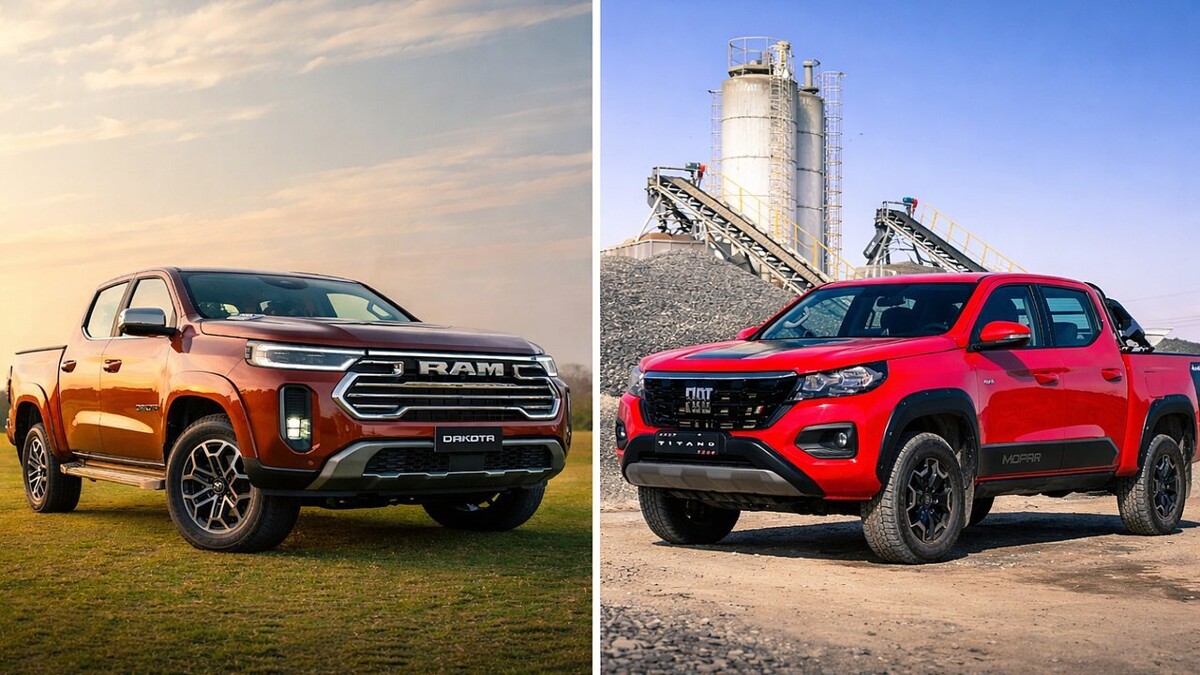
Argentina's automotive industry ended 2025 with warning signs in its industrial sector. With more cars sold but fewer vehicles produced locally, the industry deepened its dependence on imported units and reduced the weight of national models within the total sold. Eight models were discontinued in the country during the last year. While the year-on-year decline may seem moderate, the contrast with commercial performance is striking: wholesale sales grew 42.6% year-on-year, and registrations were close to 50%, driven by the normalization of supply, greater access to credit, and the reopening of imports. Nissan stopped producing the Frontier pickup truck in Argentina. In the accumulated total for 2025, exports totaled 280,589 units, 10.8% less than in 2024. With less production, lower export volumes, and a domestic market increasingly supplied by imports, the automotive balance once again showed signs of structural imbalance. The challenge of recovering competitiveness. The sector recognizes that the year's performance was uneven. During December, with only 10 business days of activity, 26,468 vehicles were produced, representing a 30.3% drop from November and a 30.4% decrease compared to December 2024, according to the official ADEFA report. In the year's accumulated total, production reached 490,876 units, a 3.1% decrease from 2024. In December, terminals exported 19,908 vehicles, a 36.3% drop from November and a 25.3% year-on-year decrease. This net balance leaves evident the retreat of local production: for every model launched, four ceased to be manufactured, in a context of strong recovery in automotive consumption. Exports on the decline and pressure on the balance. The external front also did not support this trend. The exit of these vehicles implied a concrete reduction in local supply, with a direct impact on industrial employment, autoparts integration, and export capacity. Only two launches against an shrinking supply. In contrast, the market added only two new national models: Ram Dakota and Fiat Titano. This discrepancy between production and the domestic market uncovered a change in trend. 'It is essential to continue working together with the national government, provincial, and municipal governments to reduce the tax burden that is exported in a vehicle, especially considering that several countries with which we compete export tax-free,' stated the president of Adefa, Rodrigo Pérez Graziano. He explained that 2025 left a 'mixed balance,' with a strong commercial improvement that failed to translate to the industrial plane. 'The dynamism that occurred commercially was not sustained industrially as we had foreseen, mainly due to the processes of change and transformation in the production lines for the launch of new models,' he said. In this context, the executive emphasized that the main challenge lies in improving export competitiveness. Among the models that ceased to be manufactured are: Citroën Berlingo Multispace, Nissan Frontier, Peugeot Partner Patagónica, Renault Logan, Renault Sandero, Renault Stepway, Renault Alaskan, and Volkswagen Taos.